
Gearit
What it is
You have a camera, a mic, a light and a laptop, and the result still looks wrong. The advice online comes from people paid to sell you the expensive item, and the thing actually holding you back is usually the cheapest thing on the desk.
How it works
What using Gearit is actually like.
- Why it exists
- Everyone with a camera, a mic and a light hits the same wall: the result looks wrong and nobody can say which part is at fault. The advice online comes from people paid to sell you the expensive item, so the answer is always the camera. Gearit exists to answer the honest version of the question — what is the weakest link, and what is the smallest amount of money that fixes it.
- Who it’s for
- Anyone whose picture or sound is part of their work but who isn't a technician about it: streamers, podcasters, people who live on video calls, people making content for a brand. It assumes you already own things and want to know whether the next purchase is worth making — not that you're starting from an empty desk.
- What you get
- One number for the whole setup, the name of the thing dragging it down, and a plan that spends in the order that moves the number most. The reading runs on the phone using Apple's own detection, and the scans, the photos and the report never leave it. Looking up a product sends the words you typed and nothing else — and where Gearit doesn't recognise what you named, those words go to an AI service that answers with what it is. No account is required: there is a sign-in if you want your setup on a device that isn't an iPhone, and the app is complete without it. The free tier is real, the rest is a one-time unlock rather than a subscription, and it speaks 34 languages.
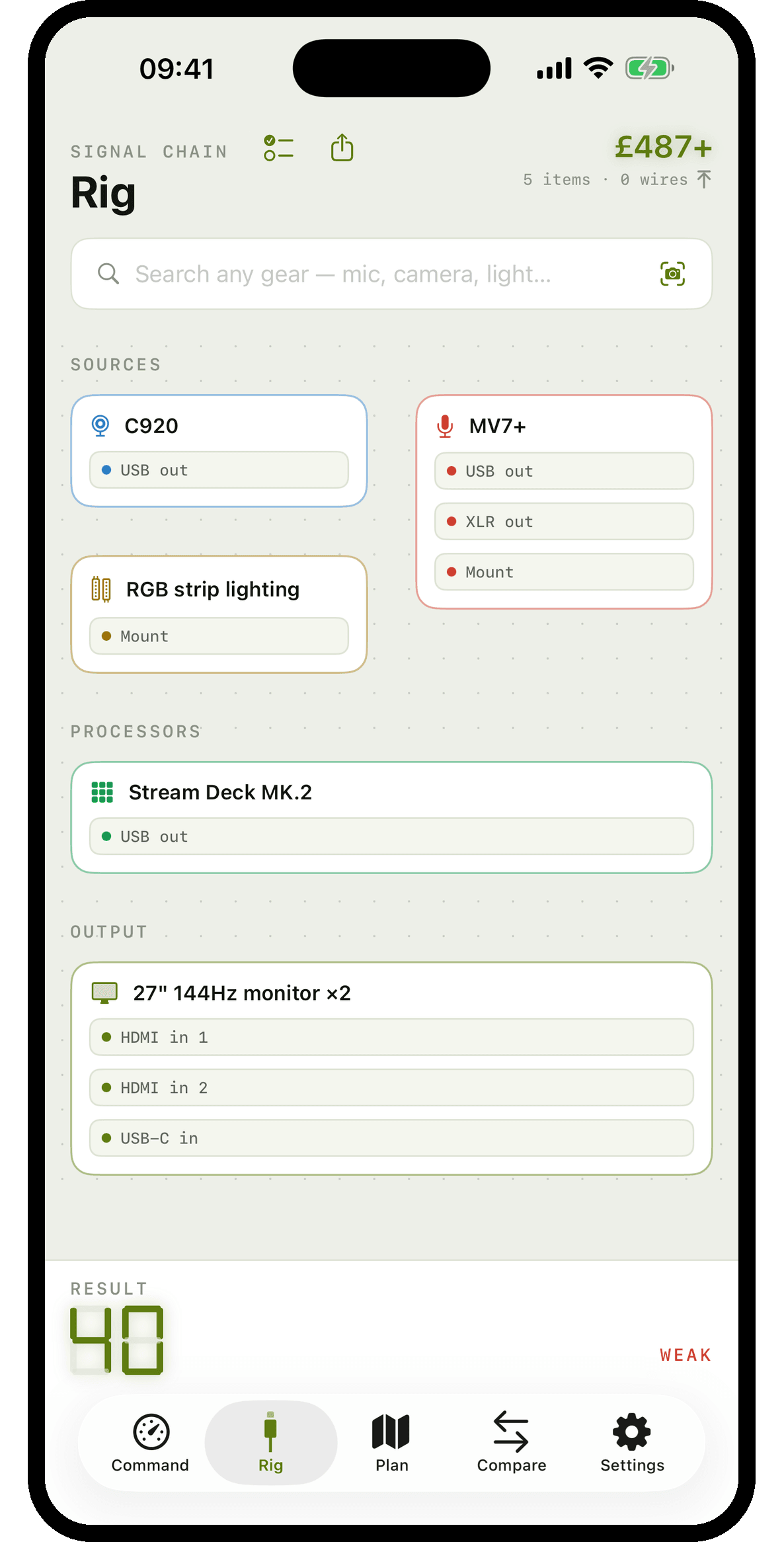
Your setup, wired the way it really is
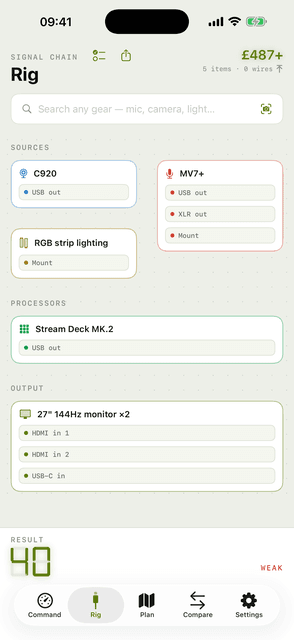
Six pieces of gear on one board, every port and every direction real — what sends a signal and what receives it. Gearit reads the whole chain and scores it 40 out of 100, and calls it what it is: weak. The number can only ever be as good as the worst part of it.
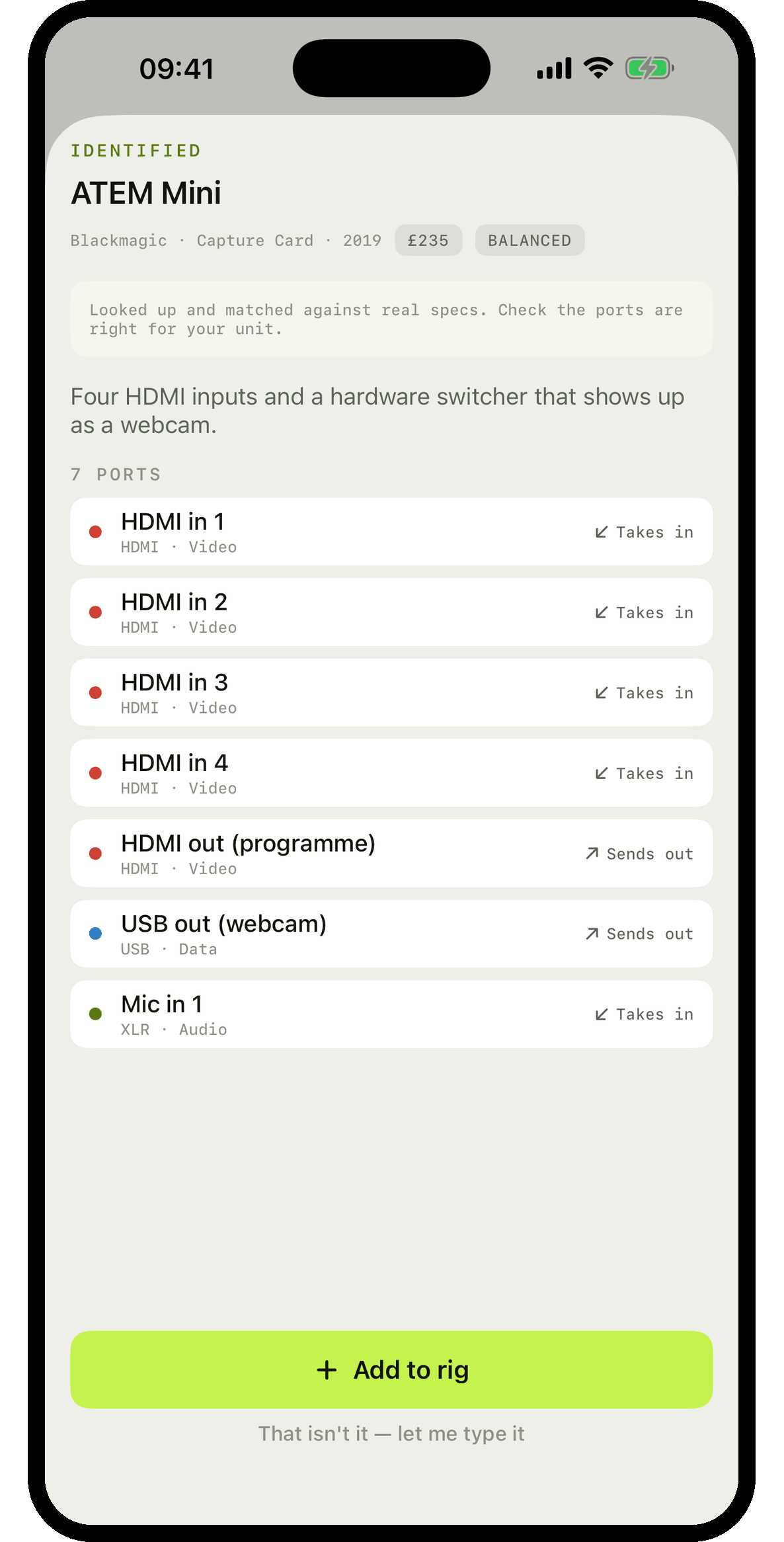
Gear the catalogue has never heard of
Type “blackmagic atem mini” and the real product comes back at £235 with all seven of its ports, each one marked as taking a signal in or sending one out. Nothing is invented, so the score has something true to work from — and once looked up, it is there for everyone.
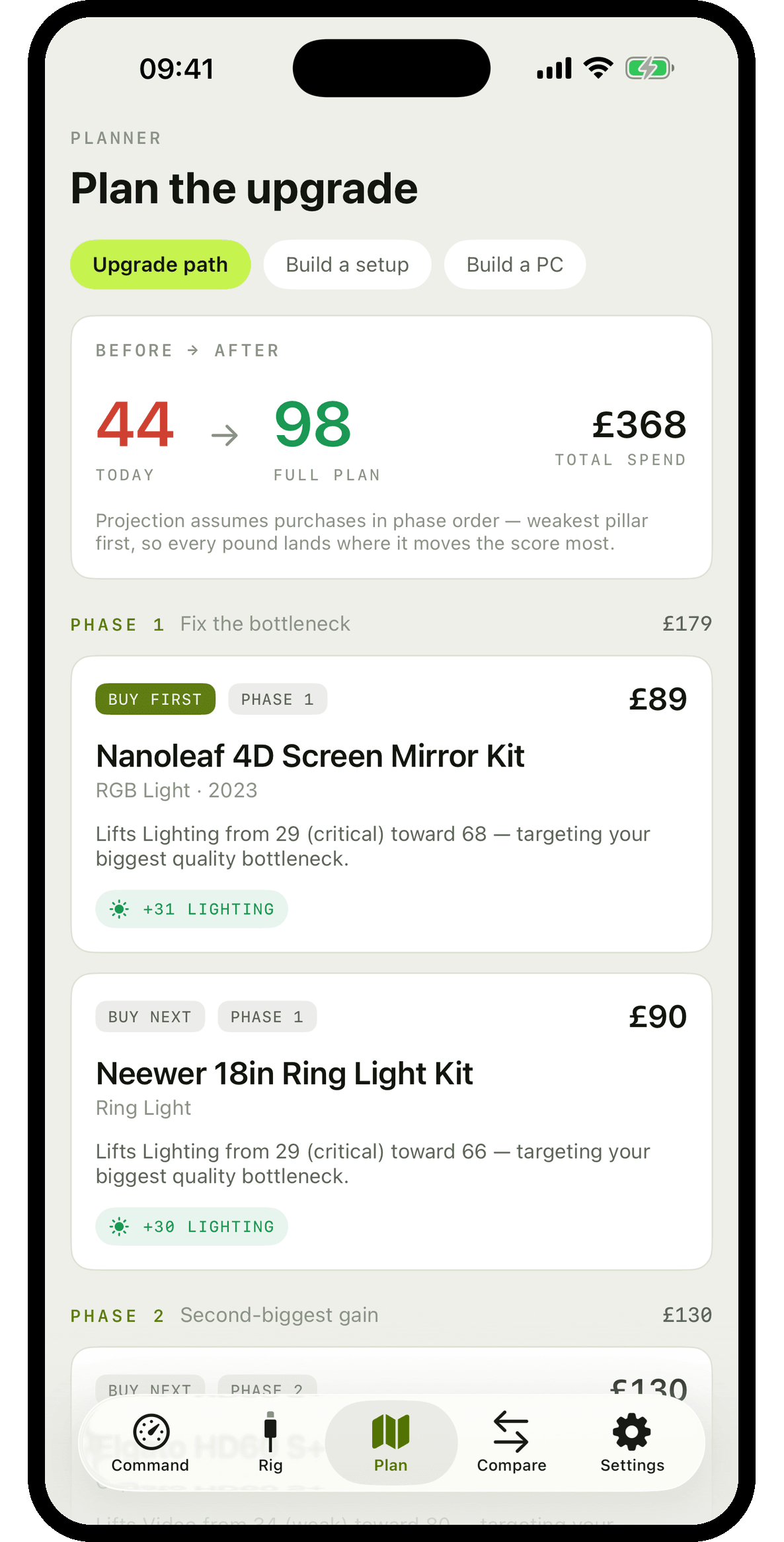
What to buy, in the order that pays
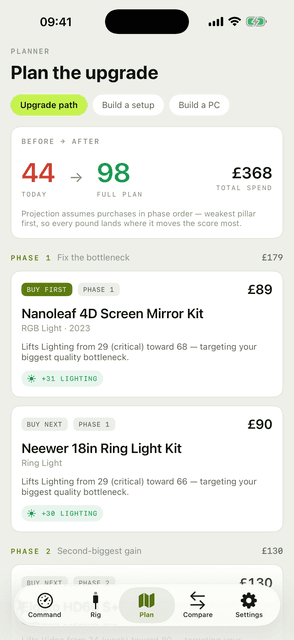
44 today to 98 if the whole plan is bought, £368 in total, phased so the weakest pillar is fixed first — here £179 of lighting before anything else. Stop after any phase and the money has still gone in the right order.
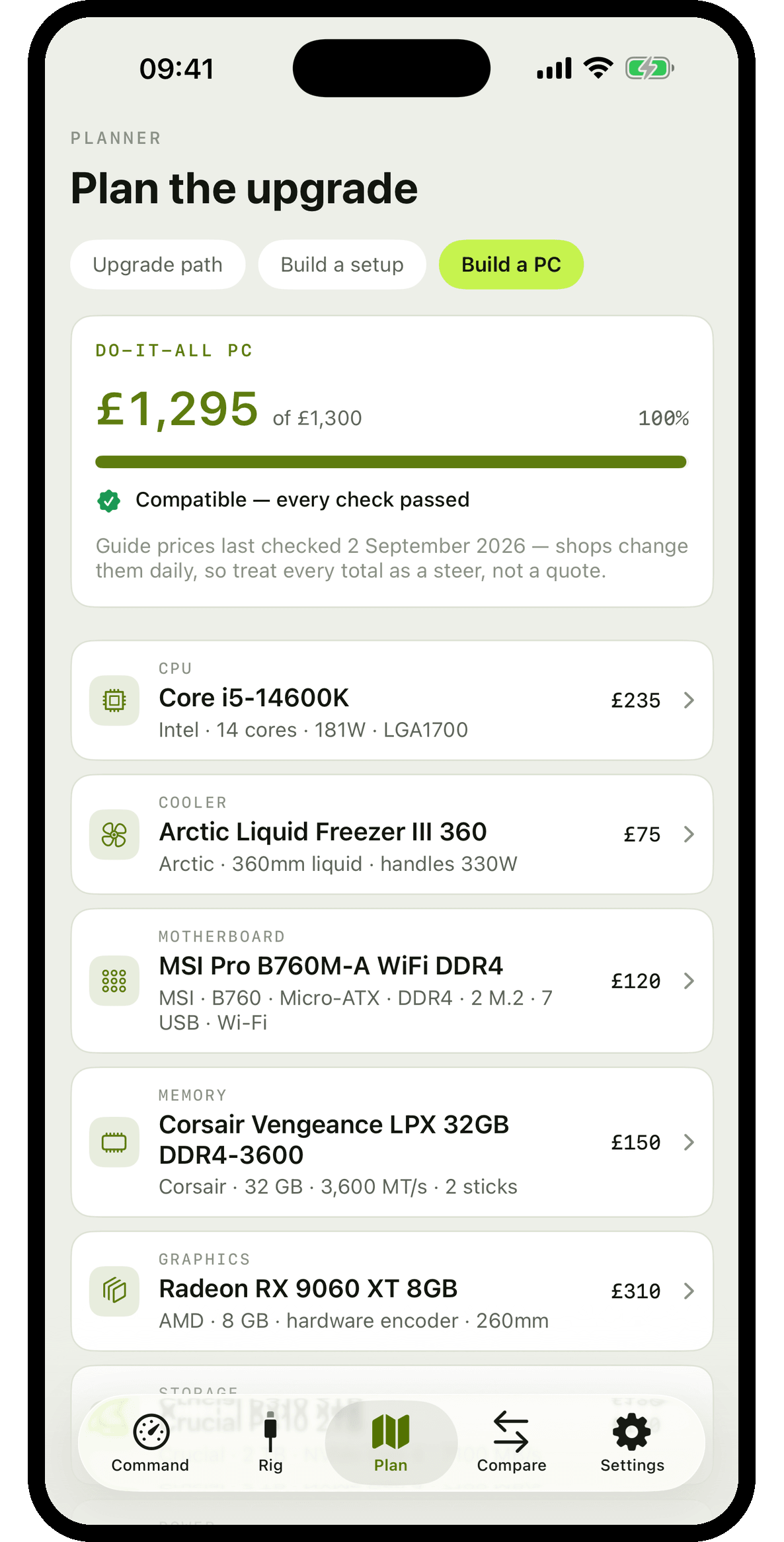
A PC to any budget
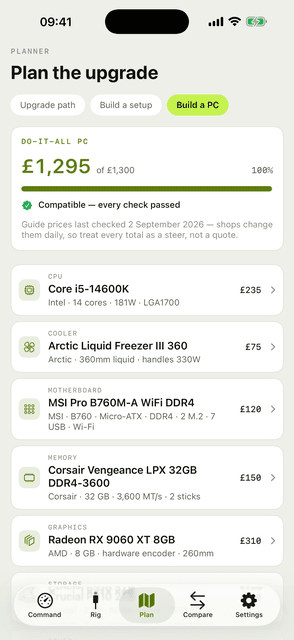
Asked for £1,300 and every-purpose use, Gearit spends £1,295 of it across eight named parts — Core i5-14600K, a 360mm liquid cooler, an RX 9060 XT — and confirms every compatibility check passed. Guide prices carry the date they were last checked, so you know how fresh the total is.
The gear file
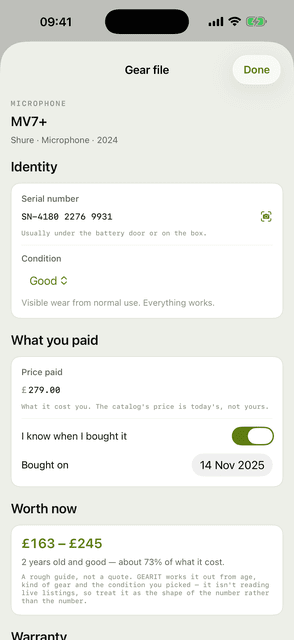
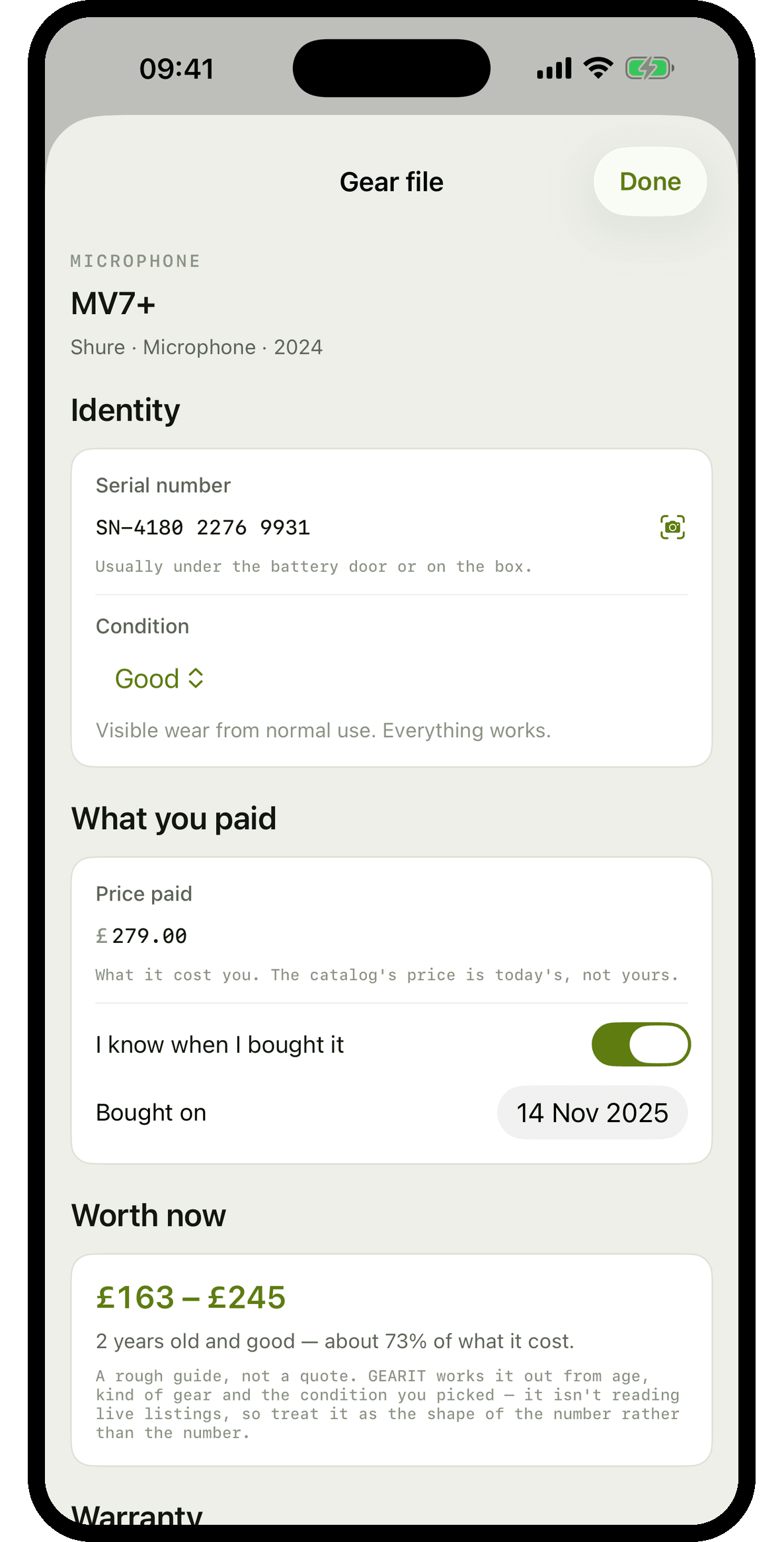
Serial number, condition, £279 paid on 14 November 2025, and what it is worth now — £163 to £245, about 73% of what it cost. The record you wish you had kept for everything you own, and it stays on the phone.
Whether it fits, before buying it
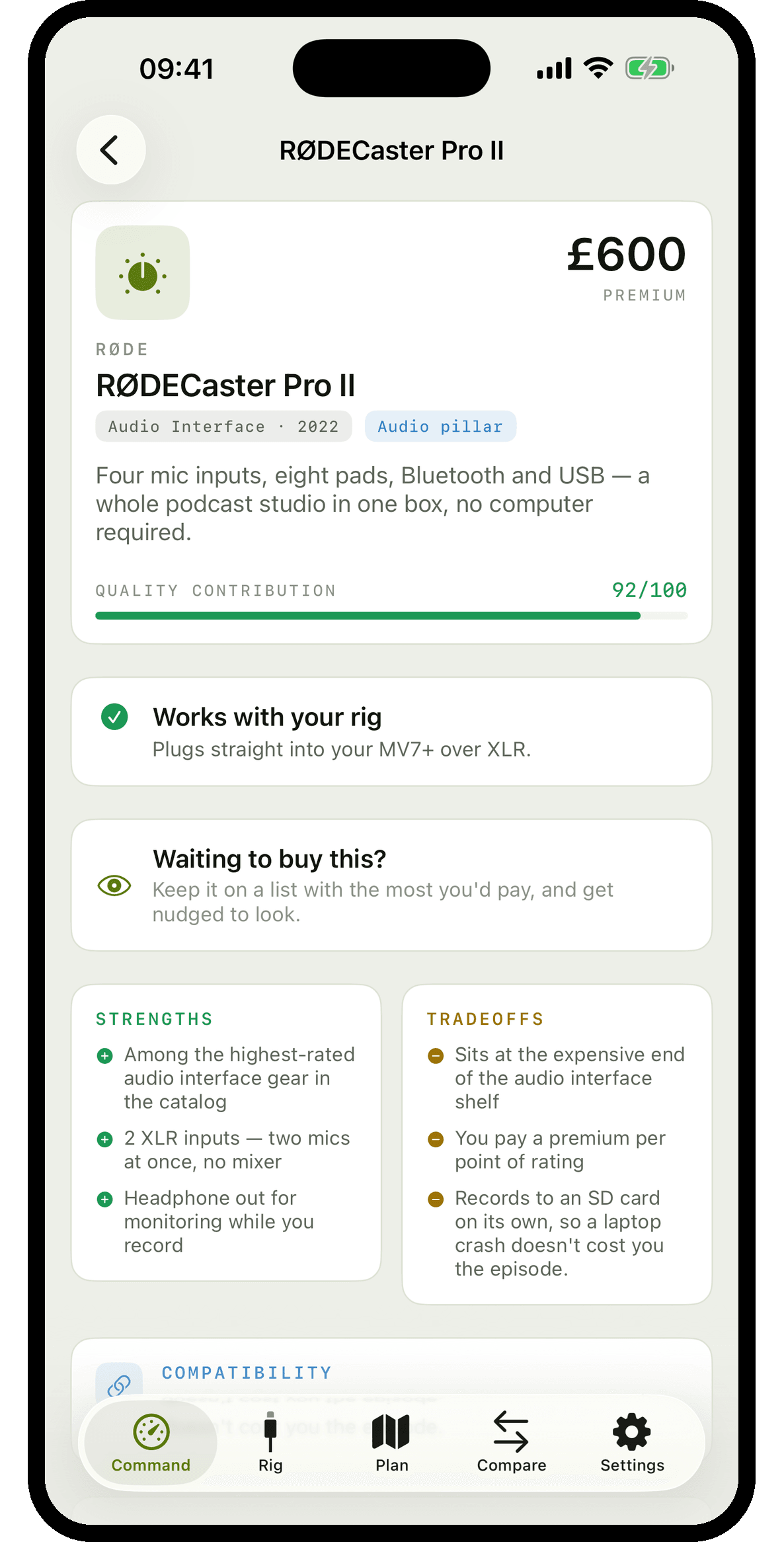
A RØDECaster Pro II at £600 plugs straight into the MV7+ over XLR — Gearit checks the connection before you check out, with the strengths and the trade-offs side by side rather than a verdict you have to take on trust.
A kit for every job
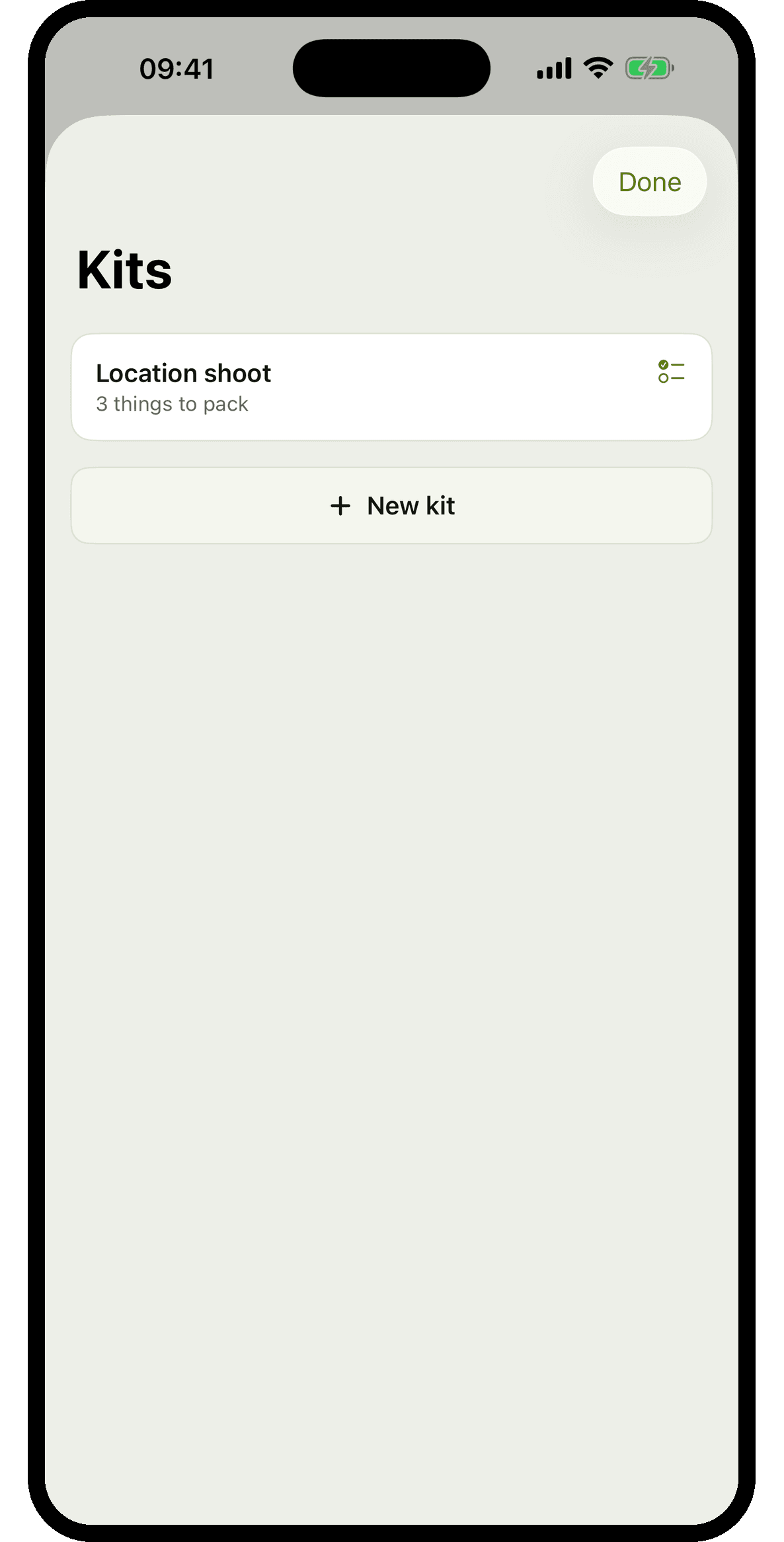
A named bag with three things to pack, and the leads worked out from the board rather than typed in. If the cable is on your setup, it is on the list.
Share the setup as a page
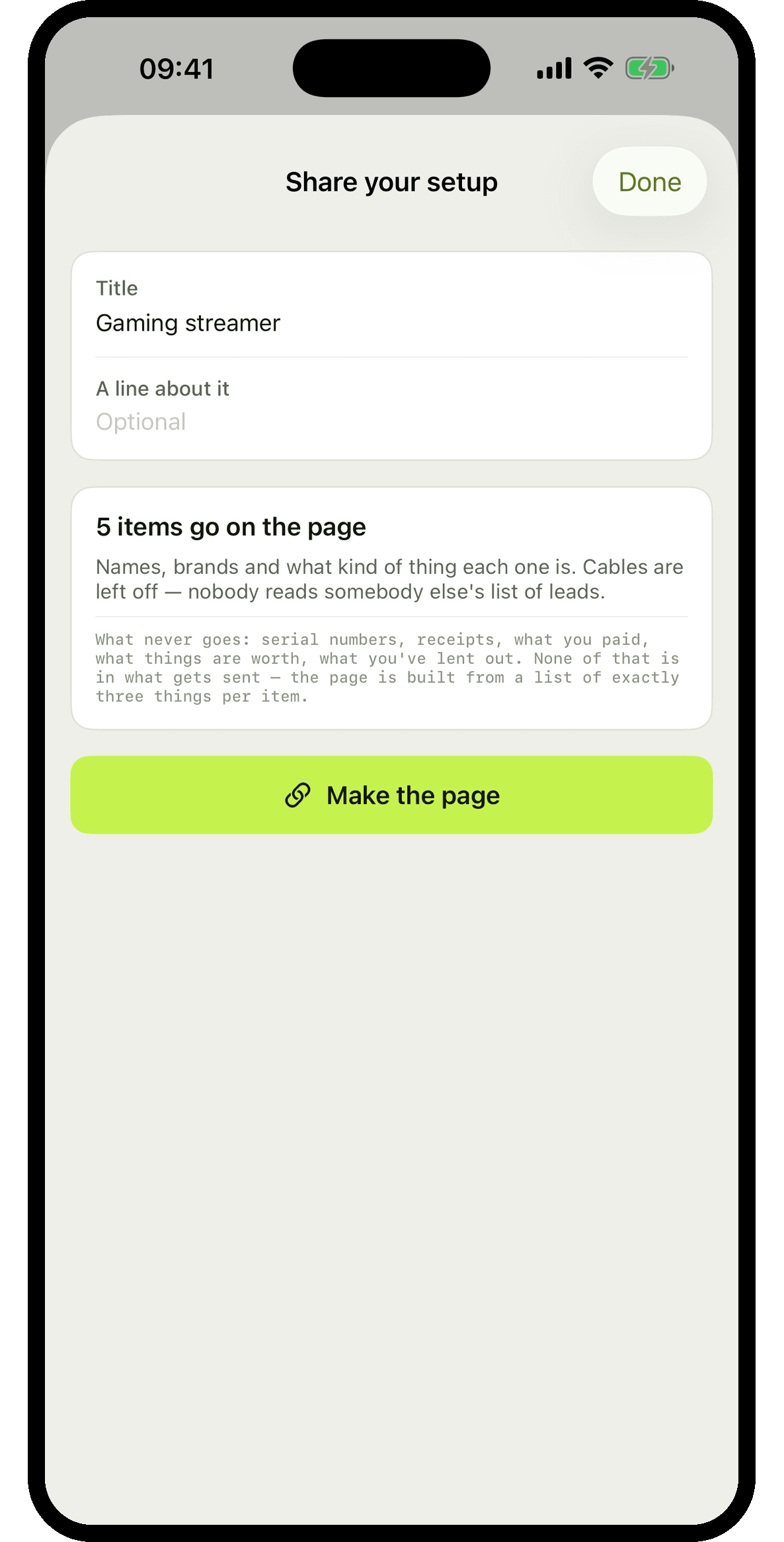
Five items go on the page: names, brands and categories, and since 1.3 the wiring between them — which socket joins to which. Serial numbers, receipts, prices and lending records are never part of what gets sent — the page is built from those fields, not by stripping the others out.
The fine print
Short, honest, readable.
Gearit keeps what you save on your device, and a few things have to leave it for the app to do its job. Every one of them is named below in plain English, at stable addresses you can rely on.